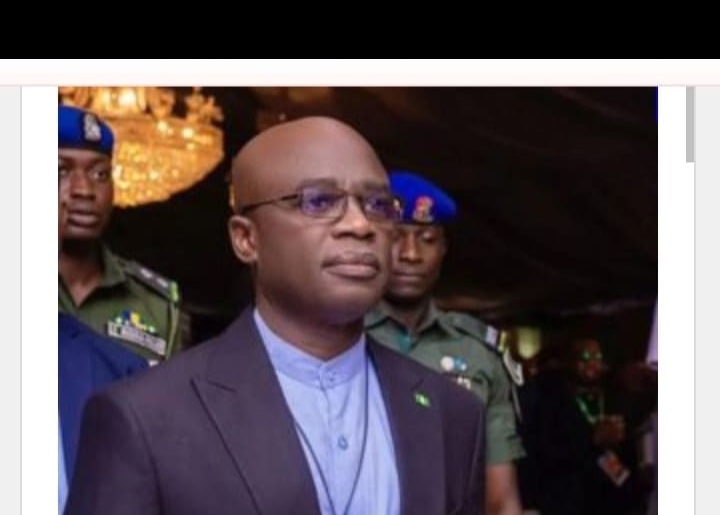
MKAA 2027 exposes many failures of Alia’s administration, says Benue still in Egypt
Nigerian Concord Newspaper
An advocacy group known as Micheal Kaase Aondoakaa Advocates 2027 has exposed many failures of the administration of Governor Hyacinth Alia ranging from insecurity to bad economy.
The advocacy group was reacting to a statement credited to the Governor’s Spokesperson, Kula Tersoo where he claimed that Benue State had left Egypt .
In his article titled: “Benue has left Egypt” Mr. Kula Tersoo stated that Governor Hyacinth Alia has been able to deliver dividends of democracy to the people of the State.
But reacting in a media note titled: “Benue has left Egypt: Tersoo Kula hallucinating in Dreamland”, the Micheal Kaase Aondoakaa Advocates 2027 stated that it was deeply distressed by the claims from the Governor’s spokesperson where he falsely portrayed that Benue State has moved forward under the administration of Fr. Hyacinth Iormem Alia.
“A reality check for the Chief Press Secretary, Sir Tersoo Kula, reveals the irony of claiming that Benue has “left Egypt” when millions of citizens across the 23 local government areas are currently experiencing unprecedented hardship, insecurity, and economic stagnation.
“In developmental economics, or development generally, when a categorical statement such as this is made, certain indices must be presented to substantiate the claim. The CPS ought to have stated the total funds Benue State has received under Governor Hyacinth Alia’s over three years in office and measured whether the claimed development is commensurate with the resources available. But we cannot blame Kula; he is only hallucinating in dreamland, apparently intoxicated by the comfort of his weekly paycheck.
“What the CPS failed to understand is that media spin and polished press statements cannot erase the daily realities faced by the average Benue citizen” the media note stated.
Michael Kaase Aondoakaa Advocates 2027 spoke further that:
If this administration considers the current state of affairs a “Promised Land,” then there is a complete disconnect between government communication and the bitter realities on the ground. Ironically, the Governor’s media apparatchiks, a confused and uncoordinated group, continue to glorify the Governor while shielding him from understanding the true plight of the people he leads.
These assertions by the CPS will not even sit well with many government appointees and senior civil servants who, off-camera, lament the poor and deplorable state of governance under Governor Hyacinth Alia, which falls far short of what was promised.
Here are ten key points highlighting the realities and suffering under the current administration, contrary to the narrative being promoted by the CPS merely to justify his weekly paycheck.
1. ZERO FRAMEWORK FOR HUMAN CAPITAL DEVELOPMENT
Despite repeated rhetoric about youth empowerment, there is no structured blueprint or sustainable programme for human capital development. Tech hubs, skills acquisition programmes, and youth enterprise grants are virtually non-existent, leaving a vibrant youth population idle and economically stranded.
2. UNCHECKED RURAL INSECURITY AND CONTINUED DISPLACEMENT
Security of lives and property remains severely compromised. Farming communities across the state continue to suffer deadly attacks, displacement, and fear. Thousands remain trapped in overcrowded IDP camps without any clear or actionable government roadmap for their safe return to their ancestral homes.
3. DEEPENING HUNGER IN THE “FOOD BASKET OF THE NATION”
It is tragic that Benue, acclaimed as the Food Basket of the Nation, is now grappling with severe food insecurity. Farmers cannot access their farmlands because of insecurity, while the absence of meaningful agricultural support has pushed food prices beyond the reach of ordinary families.
4. ABANDONMENT OF RURAL ACCESS ROADS
While a few urban road projects receive media attention, the agrarian communities where food production actually takes place remain neglected. Poor feeder roads continue to prevent farmers from transporting their produce, leading to significant post-harvest losses.
5. POOR WELFARE AND LACK OF WORK TOOLS FOR APPOINTEES AND SENIOR CIVIL SERVANTS
Governance cannot function on goodwill alone. Many political appointees, advisers, directors, and senior civil servants reportedly lack official vehicles, operational funds, and basic administrative logistics needed to perform their duties effectively.
When those entrusted with implementing government policies are denied the necessary tools, public administration inevitably suffers.
6. ABSENCE OF AN INCLUSIVE DEVELOPMENT BLUEPRINT
Governance under this administration appears largely ad hoc and highly centralized. There is no publicly available, measurable long-term development plan outlining sector-specific targets, implementation strategies, budget performance, and clear policy direction for investors.
7. CIVIL SERVICE DEMORALIZATION AND UNRESOLVED PENSION/SALARY ISSUES
Despite claims of civil service reforms, morale remains low across government ministries. Concerns over pension arrears, gratuities, promotions, salary implementation, and payroll transparency continue to generate widespread dissatisfaction among serving and retired public servants.
8. NEGLECT OF PRIMARY HEALTHCARE INFRASTRUCTURE
Beyond high-profile promises, primary healthcare centres across the state remain understaffed, underfunded, and poorly equipped. Citizens in many rural communities still travel long distances to access basic healthcare services.
9. DETERIORATING BASIC EDUCATION FACILITIES IN RURAL AREAS
Despite repeated claims of educational reforms, many primary and secondary schools in rural communities remain in deplorable condition. Numerous schools have dilapidated classrooms, inadequate teaching materials, and severe shortages of qualified teachers.
10. ECONOMIC STAGNATION AND LACK OF SUPPORT FOR LOCAL MSMEs
Small business owners, market women, artisans, and informal sector operators continue to receive little or no economic support or access to affordable credit. Rather than creating an enabling environment for businesses to thrive, economic activities remain stagnant and largely dependent on government spending.
CONCLUSION
True leadership is demonstrated through visible improvements in the standard of living, secure communities, functional institutions, and sustainable economic growth, and not propaganda.
Until the government addresses the decay in rural infrastructure, secures farmlands, equips its workforce, and genuinely invests in human capital development, declaring that “Benue has left Egypt” remains a narrative detached from the realities confronting the people.
The people of Benue deserve transparency, accountability, and tangible improvements , and not poetic press releases.