Nigerian Concord Newspaper
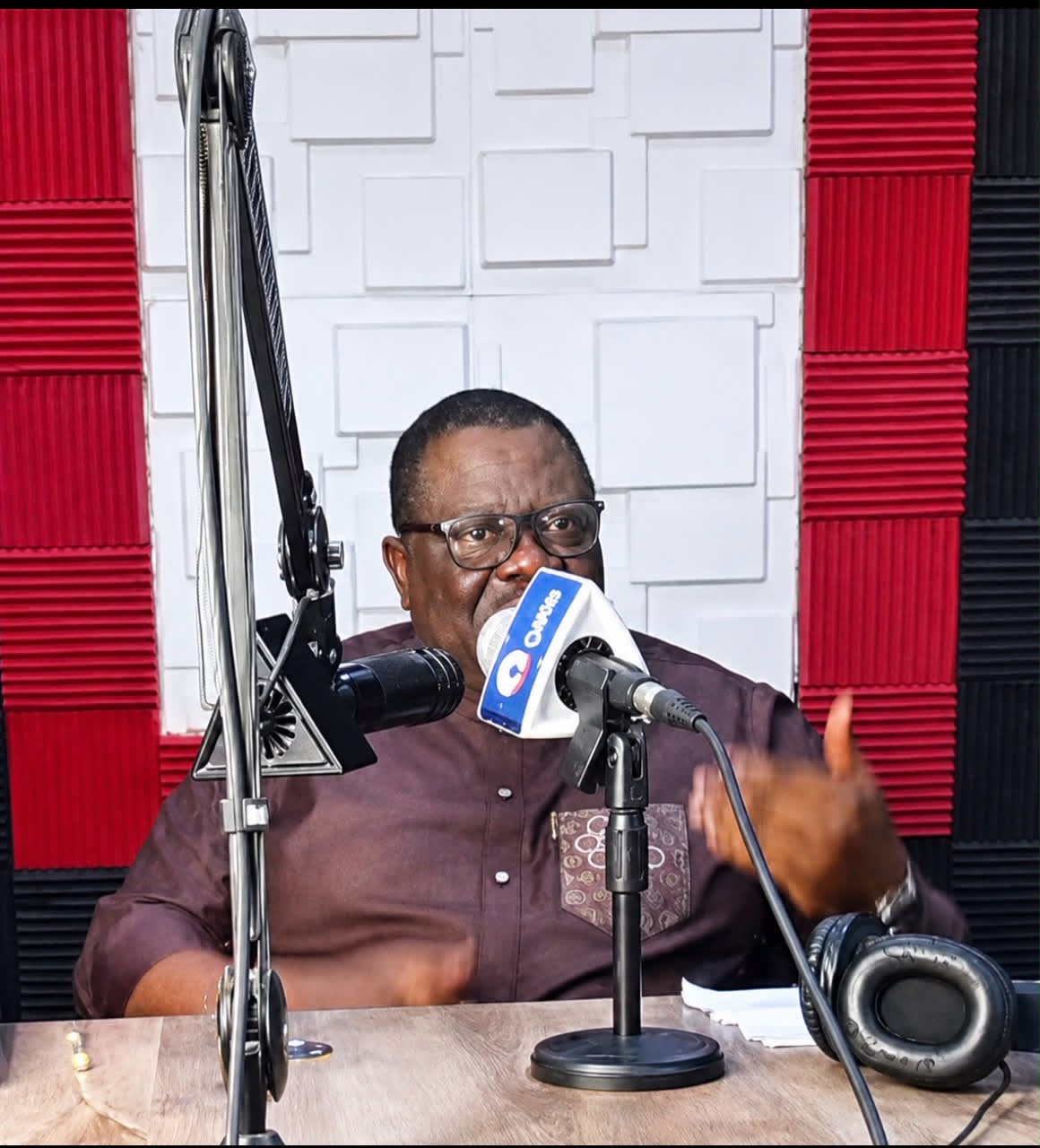
There are politicians who speak, and there are politicians who communicate understanding. There are those who make promises, and there are those who demonstrate a grasp of the problems they seek to solve. After listening attentively to Chief Michael Kaase Aondoakaa, SAN, on a live radio programme in Makurdi yesterday, I came away with one unmistakable impression: here is a man who understands governance, understands Benue, and understands what must be done to move the state forward.
For two hours, Aondoakaa did not sound like a typical politician preparing for an election. He sounded like a man who had taken time to study the challenges facing Benue State and had thought deeply about the solutions. His responses were measured, informed, and anchored on practical realities rather than political slogans.
What struck me first was his understanding of Benue’s greatest asset: agriculture.
Many people refer to Benue as the Food Basket of the Nation, but Aondoakaa went beyond the slogan. He spoke about agriculture as an economic engine capable of transforming the fortunes of the state. He understands that growing food alone is not enough. The real wealth lies in processing, packaging, marketing, and exporting agricultural products. Listening to him, it became clear that he sees agriculture not merely as farming but as an entire value chain capable of creating jobs, generating revenue, and positioning Benue among Nigeria’s leading economies.
That perspective is important because it demonstrates strategic thinking. Benue’s future prosperity will not come from dependence on federal allocations. It will come from fully exploiting the resources God has already blessed the state with. Aondoakaa understands this reality better than many.
What impressed me even more was his recognition that agriculture cannot thrive in isolation. He repeatedly linked agricultural productivity to infrastructure development, particularly rural roads and healthcare facilities. That may sound simple, but it reflects a sophisticated understanding of governance.
A farmer who cannot transport produce to the market remains poor. A community without healthcare cannot sustain productivity. A village cut off by bad roads remains economically isolated. By connecting these issues, Aondoakaa demonstrated an appreciation of how development actually works. Governance is not about isolated projects; it is about building systems that improve the lives of citizens.
His comments on insecurity were equally revealing.
Benue’s greatest tragedy today is not merely the loss of lives. It is the gradual destruction of economic activity in many rural communities. Farms have been abandoned. Villages have been deserted. Families have been displaced. Entire local economies have been disrupted.
Aondoakaa understands this connection between security and development. He spoke passionately about the need for political leaders to unite in finding lasting solutions to insecurity because, in his view, no meaningful development can take place where people live in fear.
That is the kind of thinking one expects from a leader. He recognizes that security is not simply a law-enforcement issue; it is the foundation upon which every other aspect of development rests.
I was particularly impressed by his position on local government administration.
Without hesitation, he declared that:
_“The state government has no business in dipping its hands in local government funds.”_
Those few words captured an important principle of democratic governance. Development is most effective when resources reach the grassroots. For too long, many local governments across Nigeria have struggled to deliver services because funds meant for them never fully reach them. Aondoakaa’s position suggests that he understands the importance of empowering local councils to drive development in their communities.
His support for equitable distribution of resources across Benue’s three Senatorial Districts was equally reassuring. Every community deserves to feel the presence of government. Development should not be concentrated in a few locations while others are left behind. His insistence on fairness reflects a leader who appreciates the importance of inclusion and balanced growth.
On the contentious issue of ranching, Aondoakaa’s position was both clear and principled.
He described ranching as the best form of modern animal husbandry, a position supported by global best practices. However, he was equally firm that ranching is a private business venture and not a government enterprise.
_“Ranching is a private investment and not government establishment,”_ he stated.
More importantly, he insisted that any ranching initiative must comply with the Benue State Open Grazing Prohibition and Ranches Establishment Law. That response reflected respect for the rule of law and an understanding that policies must operate within established legal frameworks.
Perhaps the most emotional moment of the interview came when he spoke about internally displaced persons.
While many discussions focus on expanding camps, Aondoakaa focused on restoring lives.
_“I don’t believe in building IDP camps for Benue people. Benue people need their ancestral homes made safe again, not permanent camps.”_
Those words resonated deeply because they addressed the issue from the perspective of human dignity. No one dreams of spending years in a camp. People want to return to their homes, farms, and communities. Aondoakaa’s statement reflected empathy, compassion, and a commitment to addressing the root causes of displacement rather than merely managing its consequences.
Another moment that caught my attention was his endorsement of President Bola Tinubu’s call for citizens to hold governors accountable.
_“President Tinubu was right to say that the people should hold governors accountable.”_
That statement revealed confidence in the principle of accountability. Leaders who welcome accountability are usually those who understand that public office is a trust, not a privilege.
Throughout the programme, one theme remained constant: opportunity.
Aondoakaa repeatedly spoke about creating jobs, empowering young people, and stimulating economic activity. He understands that unemployment is not merely an economic problem; it is also a social and security challenge. A society that provides opportunities for its youths is a society that secures its future.
By the time the programme ended, I was left with the impression that Chief Michael Aondoakaa possesses something increasingly rare in contemporary politics: a coherent understanding of governance.
He understands that security affects agriculture. Agriculture drives the economy. Infrastructure supports agriculture. Local governments stimulate grassroots development. Youth empowerment promotes social stability. Accountability improves governance. These are not isolated issues; they are interconnected parts of a larger development agenda.
Listening to him was refreshing because he spoke not as someone searching for applause but as someone explaining a roadmap.
Whether discussing agriculture, security, local government autonomy, ranching, rural development, or youth empowerment, Aondoakaa displayed depth, clarity, and practical insight.
As Benue approaches the 2027 governorship election, voters will ultimately decide who leads the state. But after listening carefully to Michael Kaase Aondoakaa, SAN, on radio, I am convinced of one thing: he understands the problems confronting Benue, he understands the opportunities before us, and he has a clear idea of what government must do to make life better for the people.
In a state yearning for purposeful leadership, that understanding may well be his greatest qualification.
• Mande is a public affairs analyst.