Nigerian Concord Newspaper
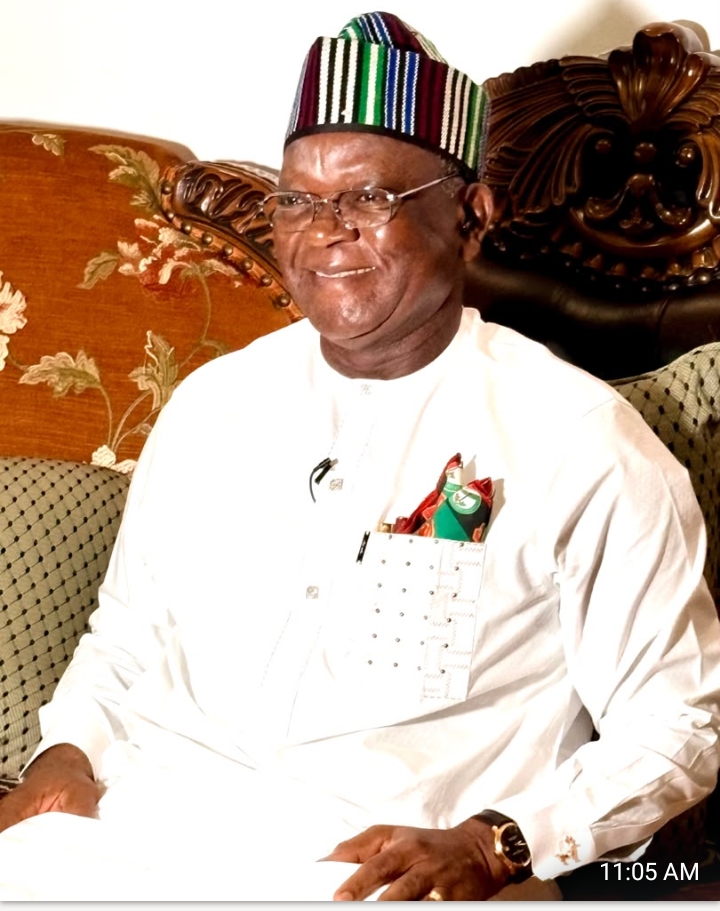
The story of Benue State politics, particularly since the 2003 general elections, cannot be told without acknowledging the influence of one man who is Chief Samuel Ortom, Nyamikyume i Tiv.
By his own account, Ortom entered politics as a youth leader in Gboko during the Second Republic in 1979. By the time Nigeria returned to democratic rule in 1999, he had already spent about two decades learning the art of political organization, mobilization, and leadership.
For much of that period, Ortom was a loyal disciple of the late Wantaregh Paul Iorpuu Unongo, one of the most enduring political figures in Nigerian history. Although Unongo never occupied the highest political office, he remained a major force from the First Republic until his death in 2022. Through the NPP, SDP, NCP, APP and other political platforms, he influenced political outcomes and helped many politicians attain public office.
Yet, despite his loyalty and years of service, Ortom’s rewards under the Unongo political structure were modest. He served as Chairman of Guma Local Government in 1991 and held various party positions, but his real political breakthrough came in 2003.
That year, then Governor George Akume brought him into the Peoples Democratic Party (PDP) and appointed him State Secretary of the party. It was a significant move. Akume was not merely recruiting another politician; he was bringing into the PDP a seasoned political operative with deep grassroots experience and organizational skills.
Ortom quickly justified the confidence reposed in him. As PDP Secretary and later Vice Chairman, he became one of the key architects of the party’s dominance in Benue State. He played a major role in stabilizing the political structure that ensured Akume’s successful second-term bid and eventual election to the Senate in 2007.
His rise thereafter was steady. He became National Auditor of the PDP, later served as Minister of State, acting minister of Aviation and ultimately emerged Governor of Benue State, serving from 2015 to 2023.
Following his departure from office, many assumed Ortom’s political influence had waned. For nearly three years, he remained largely out of the public spotlight. However, his recent intervention in the debate surrounding the 2027 elections has demonstrated that he remains a significant voice in Benue politics.
More importantly, he has once again succeeded in setting the agenda. Rather than merely reacting to events, Ortom has framed the issues that are likely to dominate political discussions as the state moves closer to the next election cycle.
One may agree or disagree with him. One may even dislike his politics. Yet it is difficult to deny his political courage, his grasp of issues, and his willingness to state his convictions publicly. These qualities have distinguished him throughout his political career.
In 2023, Ortom championed the idea of strategic political partnerships and broad-based alliances. At the time, many dismissed his position as mere political calculation. Subsequent events, however, suggest that his assessment of the political landscape was not without merit.
Today, he has again offered a candid assessment of Governor Hyacinth Alia and the direction of governance in Benue State. While critics may view his comments through a partisan lens, unfolding events continue to invite comparisons between Ortom’s warnings and current realities.
Those who dismiss Ortom outright often overlook his years in office and the principles that defined much of his political engagement. Whether one agrees with him or not, he consistently demonstrated a willingness to challenge powerful interests and speak on issues he considered important to the future of Benue State and Nigeria.
History often reserves a special place for leaders who are prepared to take unpopular positions in defence of their convictions. Samuel Ortom belongs in that category.
It is therefore important to properly situate his role in the political history of Benue State. Beyond the offices he has held, Ortom has remained one of the defining actors in the state’s political evolution.
For that reason, Chief Samuel Ortom remains, in many respects, the live wire of Benue politics.