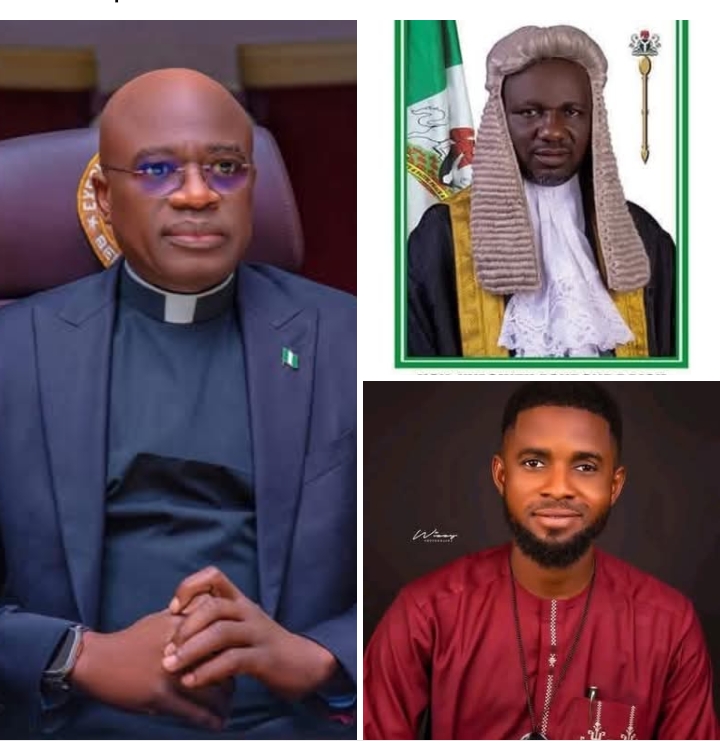
Nigerian Concord Newspaper
Politics has a cruel habit of turning friends into rivals and allies into witnesses.Throughout history, leaders have often discovered that the most dangerous criticism does not come from opponents who never supported them. It comes from former comrades who once sat at the table, fought the battles and shared the victories.
This week, Rt. Hon. Aondona Dajoh celebrated two milestones; one was his 50th birthday and and another was anniversary of his three years as the member representing Gbemacha State Constituency in the Benue State House of Assembly.
For many observers, however, it was not the celebration that attracted attention. It was what Dajoh said at Akpagher, Gboko Local Government, venue of the twin celebrations.
The former Speaker alleged that his removal from office was connected to his opposition to a proposal to relocate the Tor Tiv Palace from Gboko to Ihugh. He also made other allegations concerning events within the Alia administration.
Whether these claims are accepted or disputed is a matter for political debate. What cannot be disputed is the identity of the speaker.
Dajoh was not merely another APC lawmaker. His emergence as Speaker on June 5, 2023, was one of the earliest and most significant victories recorded by Governor Hyacinth Alia in the power struggle that followed his inauguration.
At the time, Alia was locked in a contest for political supremacy with forces loyal to Senator George Akume. The governor won important battles. He installed his preferred Speaker, secured his preferred Chief of Staff and SSG. The message was clear, a new political order had arrived.
Three years later, the picture is remarkably different. Paul Biam is no longer Chief of Staff, Prof. Joseph Alakali is no longer SSG and Aondona Dajoh is no longer Speaker. More significantly, Dajoh is no longer in APC.
Last month, he crossed over to PDP and arrived early enough to secure the opposition party’s ticket for Gbemacha ahead of the next election cycle.That fact changes everything.
His comments should not be viewed merely as complaints from a former Speaker. They should be viewed as the political arguments of a man who has now positioned himself on the opposite side of the battlefield.
History suggests that leaders should pay close attention when former allies begin to find new political homes.
Julius Caesar spent years defeating enemies across Europe, yet the conspiracy that ultimately destroyed him emerged largely from within his own political circle. Richard Nixon survived repeated attacks from political opponents, but his presidency collapsed when trusted insiders began talking and allies withdrew their protection. Robert Mugabe outlasted generations of opposition politicians in Zimbabwe, only to discover that the greatest threat to his rule came from influential figures within the establishment he had built.
The lesson from these examples is not that Governor Alia faces the same fate. Rather, it is that leaders are often weakened not when enemies attack them, but when former allies stop defending them.
This is where the real lesson lies. In politics, removal is often easier than replacement. A leader may remove an ally from office, but he cannot always remove that ally from relevance. The former ally retains memories, relationships, supporters and in some cases, ambitions.
The moment such a person joins the opposition, every grievance acquires political value.Every disagreement becomes campaign material. Every private conversation becomes public discussion. Every former ally becomes a potential critic.
For Governor Alia, the concern should not simply be that Aondona Dajoh has spoken. Politicians criticize one another every day. The more important question is whether Dajoh represents an isolated voice or the beginning of a wider conversation among former associates who now feel excluded from the political project they once helped build.
If more former allies begin speaking from different political platforms, the challenge before the governor may gradually shift from defeating the opposition to explaining why so many former comrades have become opponents.
We hope to hear from Paul Biam soon.