Nigerian Concord Newspaper
History often leaves clues before it announces its verdict. Long before election results are declared, before campaign posters flood the streets, before party structures fully align themselves, there are subtle indicators that attentive observers can identify. In every era, politics has had its own barometer of popularity. In the age of newspapers, it was editorial endorsements. In the era of radio, it was public mention and audience reach. In the age of television, it was visibility and image projection.
Today, however, we live in the age of social media. The digital sphere has become the modern public square. It is where political narratives are shaped, reputations are built and public sentiment is tested in real time.
Political scholars examining the 2008 election victory of Barack Obama have repeatedly pointed to one fact which is that social media transformed politics. Obama’s campaign demonstrated that digital engagement could be converted into political capital. Since then, no serious politician anywhere in the world has ignored the power of online influence.
From Donald Trump in the United States to Narendra Modi in India and numerous political leaders across Africa, social media has evolved into a crucial measure of political relevance. It is now impossible to separate political strength from digital visibility.
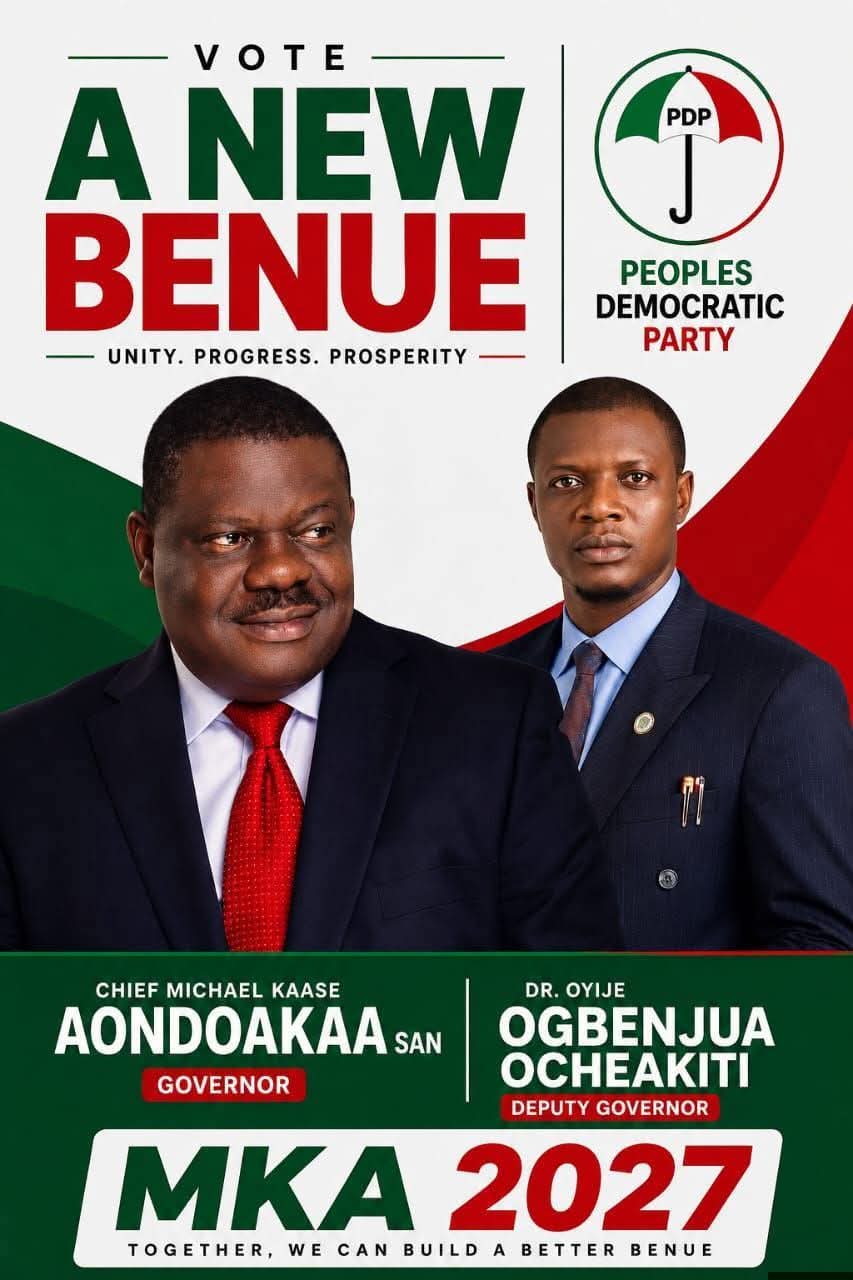
It is against this backdrop that the events of June 12, 2026 deserve careful examination.On that day, Chief Michael Kaase Aondoakaa, SAN, the PDP gubernatorial candidate for the 2027 election, celebrated his 64th birthday. What followed was more than the routine exchange of birthday greetings common in political circles. The volume of goodwill messages, endorsements, tributes, testimonials, photographs, videos and public expressions of admiration that flooded social media platforms revealed something deeper.
For hours and indeed days, social media spaces associated with Benue politics revolved around one name, that of MKA.The significance of this development should not be underestimated.
Social media engagement is not merely about numbers. It reflects emotional investment. It reflects recognition. It reflects relevance. Most importantly, it reflects the ability of a political brand to command attention without spending enormous resources on mobilization.What occurred on June 12 was an organic demonstration of the strength of the MKA brand.
Across generations, professions, local governments and political tendencies, people found reasons to celebrate him. Lawyers highlighted his legal accomplishments. Politicians praised his experience. Community leaders acknowledged his contributions. Young people amplified his image and message across multiple digital platforms.
In modern politics, such spontaneous digital momentum is often the earliest indication of electoral viability.The lesson of recent political history is clear. Before victories are recorded at polling units, they are often foreshadowed in the arena of public sentiment. Before ballots are counted, political energy begins to gather around personalities perceived as credible alternatives.
This is why June 12 may eventually be remembered as more than a birthday celebration. It may be remembered as the first visible leakage of what lies ahead.
Political contests are not won on social media alone, yet social media has become the first battlefield where momentum reveals itself.The birthday celebration of Chief Michael Kaase Aondoakaa offered a glimpse into that momentum.
Whether supporters call it a signal, a symptom, or a sign, one conclusion is difficult to ignore, which is that the MKA brand remains one of the most dominant and recognizable political brands in Benue State today and if history is any guide, political earthquakes often announce themselves first through faint tremors.For many observers, June 12, 2026 may have been exactly a tremor. The first leakage of February 6 on the day MKA will win the gubernatorial election landslide.