Nigerian Concord Newspaper
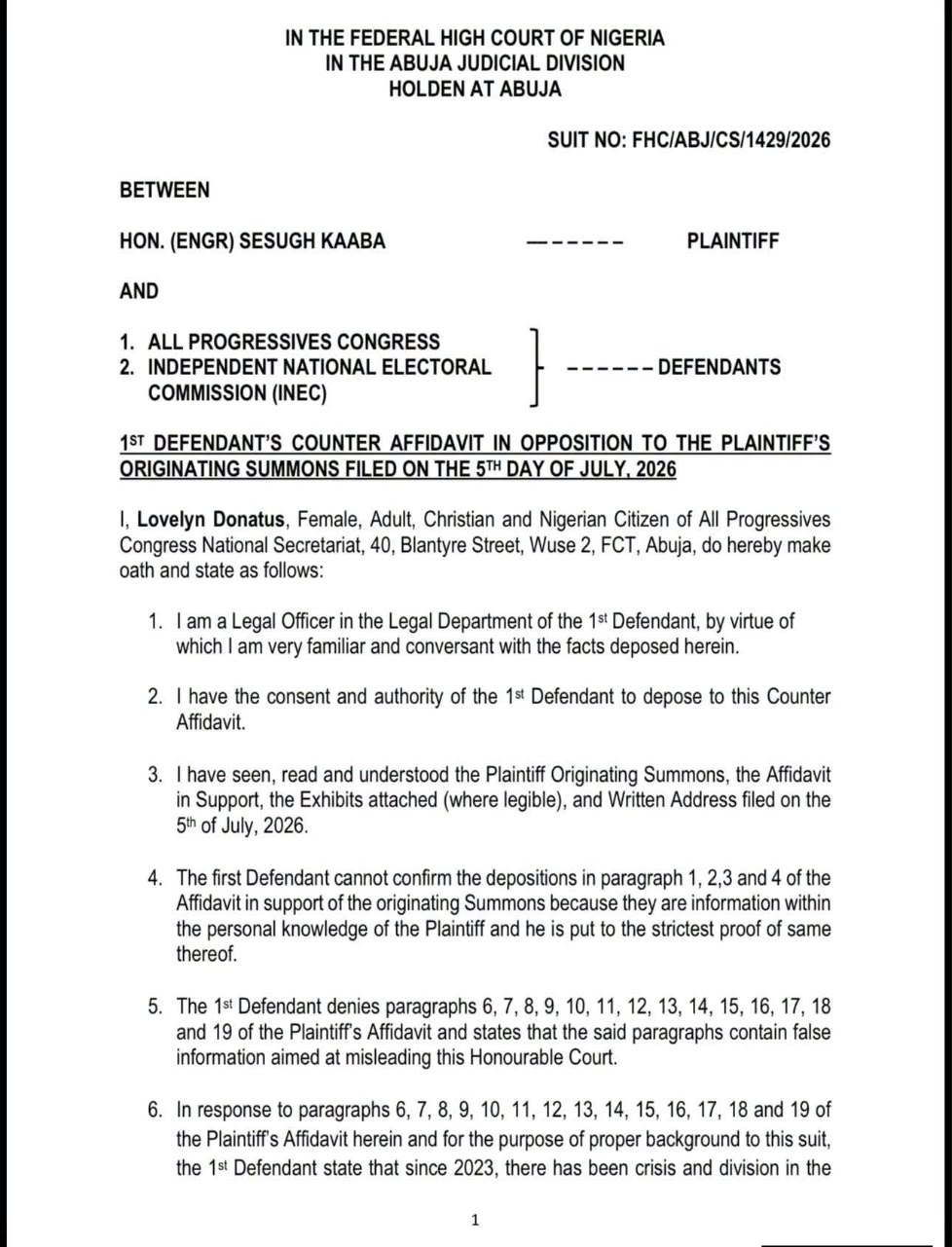
Hon. Egnr. Sesugh Kabba had earlier participated in the APC primaries in one of the constituencies in Gboko and emerged as the winner. However, before the successful candidates’ names were submitted to INEC, he allegedly received information that his name and those of other successful candidates were going to be substituted with candidates loyal to the Akume camp.
Without the consent or authorization of the other affected candidates, he approached the court and obtained an interim restraining order against APC and INEC, seeking to prevent them from uploading or submitting candidates other than those who had won the primaries and were officially announced by APC.
However, before the order could be served and effectively enforced, INEC had already received the list submitted by the APC National Secretariat and published the names. The circumstances had therefore changed before the order could have any practical effect.
The case nevertheless proceeded to judgment today. The key points of the judgment were:
1. The substantive issue was not determined. The court did not decide whether the alleged substitution was lawful or unlawful because the claimant could not establish the necessary locus standi to maintain the action in the manner it was constituted. Some of the persons whose rights he purported to protect rejected the representation and filed applications asking the court to strike out their names from the suit.
2. No sufficient basis for representative action. The claimant failed to provide adequate evidence or legal foundation to justify bringing the case as a representative or collective action on behalf of the other candidates.
3. The subject matter had become moot. While the case was pending, INEC deregistered the affected constituency. Consequently, the factual circumstances underlying the claim changed substantially, leaving the subject matter without a live or effective controversy capable of being determined in the manner originally presented.
4. Other pending cases are not affected. Today’s judgment does not automatically determine or prejudice other cases that may come before the courts concerning the APC primaries, candidate substitution, nominations or related electoral disputes. Each case must be determined on its own facts, parties, pleadings, evidence, issues and reliefs sought. The court cannot collectively determine separate disputes that are properly subject to independent adjudication.
In summary, the court did not make a blanket pronouncement validating the alleged substitution of candidates. Rather, the decision was based substantially on the competence and standing of the claimant, the absence of sufficient evidence to sustain a representative action, and the subsequent change in circumstances affecting the subject matter of the particular case. Other cases will therefore stand or fall on their own facts and applicable law.
Source Jirgba Terver