Nigerian Concord Newspaper
Prior to the 2023 elections from which Chief Hyacinth Iormem Alia emerged as what Barrister Emmanuel Jime famously described as “this thing afflicting us in Benue,” Alia presented insecurity as a problem with a simple solution. He claimed that all that was required was to put a number of things in “check” and that the algorithm was simple. It sounded convincing at the time. Three years later, however, the people of Benue are entitled to ask what happened to that simple algorithm.
The reality confronting Benue today suggests that what was presented as simplicity may have been nothing more than a lack of understanding of the complexity of the security crisis. The insecurity did not disappear. Communities have continued to suffer attacks, displacement, destruction of livelihoods and loss of lives. The grammar was impressive, but the results have been difficult to find.
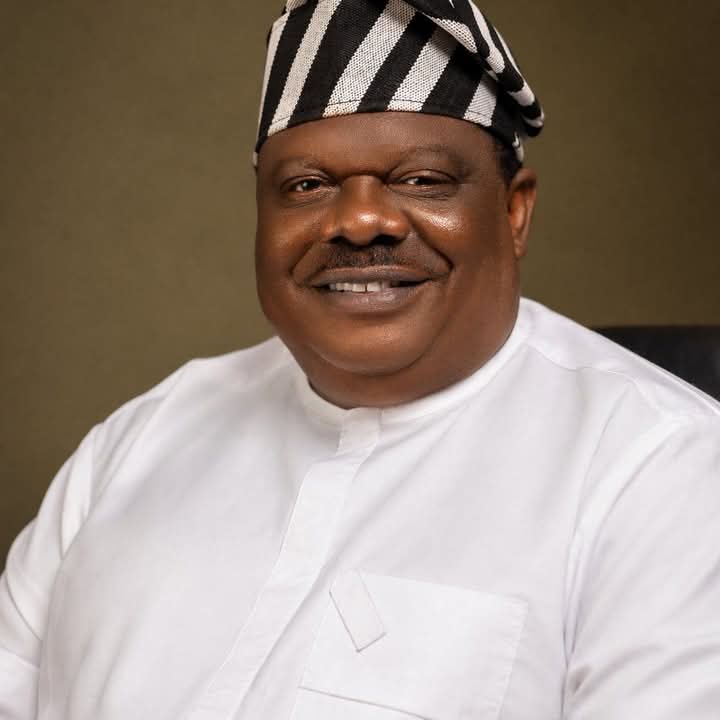
Last week, Chief Michael Kaase Aondoakaa SAN, whom Alia’s political camp rightly sees as a formidable threat ahead of the 2027 election, offered a sharp contrast. Appearing on the Arise TV Morning Show, Aondoakaa spoke extensively about the practical measures that ought to have been taken over the past three years to confront insecurity in Benue. His intervention was not an exercise in political rhetoric. It was a presentation of what a prepared administration should have been doing.
The conversation exposed one important difference between the two men. Aondoakaa spoke from the standpoint of someone who appeared to have studied the problem, understood its dimensions and thought through the institutional and security responses required to confront it. He made it clear that time had been lost and that the responsibility would eventually have to be undertaken by another administration. It was a confident presentation of a man already preparing for the assignment before him.
Then came Alia’s own opportunity to demonstrate leadership at the North Central security summit, where important stakeholders from across the region gathered to deliberate on one of the most serious challenges confronting the region. It was precisely the kind of platform where the Governor of Benue should have spoken with clarity about the realities confronting his people and demanded concrete action. But Alia missed the moment.
Instead of using the gathering to make an unequivocal case that Benue does not have land to surrender for ranching and that the people of the state do not accept the inclusion of Benue in any pilot ranching programme imposed without their consent, Alia maintained his familiar description of the insecurity as mere skirmishes arising from farmer and herder clashes.
That description is deeply troubling because it risks reducing a sustained security crisis to an ordinary disagreement between two groups over access to farmland. What Benue has experienced in several communities cannot simply be explained away as farmers and herders exchanging blows over grazing routes. The scale, persistence and consequences of the attacks demand a more serious description and a more decisive response.
The Tor Tiv has also consistently drawn attention to the deeper dimensions of the crisis, including the issue of land and the systematic displacement of communities. For many victims, this is not an abstract argument about terminology. It is about homes destroyed, ancestral lands abandoned, farms lost and communities forced to live under constant fear.
This is where leadership matters. A Governor does not attend a regional security summit merely to repeat familiar talking points. He attends to articulate the peculiar security realities of his people, mobilise allies, demand federal intervention and make the state’s position unmistakably clear.
Unfortunately, Alia appears to have entered the summit with an argument already weakened by the language he has repeatedly used to describe the crisis. The people of Benue need a Governor who understands that insecurity is not solved by carefully arranged sentences. It is solved through intelligence, security coordination, political will, strategic engagement, protection of vulnerable communities and decisive action.
This is precisely why Aondoakaa’s appearance on Arise TV matters. It provided a glimpse of the difference between a leader who is explaining why a problem is difficult and one who is prepared to confront the problem with a defined strategy. Three years after Alia’s promise that the insecurity problem had a simple algorithm, Benue is still waiting for the algorithm to work.
The 2027 election may therefore become a test of leadership. Alia has had three years to demonstrate that he understands the security challenge and possesses the capacity to defeat it. Aondoakaa is now presenting himself as the alternative, arguing that the problem has been sufficiently studied and that what Benue needs is not more grammar but competent leadership.
The choice before Benue may ultimately be very simple: another administration explaining the problem, or a leadership prepared to confront it. Alia came with grammar. Aondoakaa came prepared.