Nigerian Concord Newspaper
The recent “analysis” published by Daily Trust on the possible outcome of the 2027 Benue gubernatorial election, under the caption “Inside Alia’s Second Term Battle,” does not reflect the prevailing political realities, mood and electoral temperament in the state. It would therefore be improper to allow such a misleading projection to pass without a necessary correction.
According to the publication, although Governor Rev. Fr. Dr. Hyacinth Iormem Alia is facing considerable internal pressures within the APC, the incumbency factor may still secure him a second term. That conclusion is speculative and lacking in empirical depth. It is disappointing that a newspaper of Daily Trust’s standing reduced a serious political assessment to what appears more like impressionistic commentary than grounded political analysis.
The true picture of the 2027 Benue governorship race is far more complex and far less favourable to Governor Alia than Daily Trust suggests.
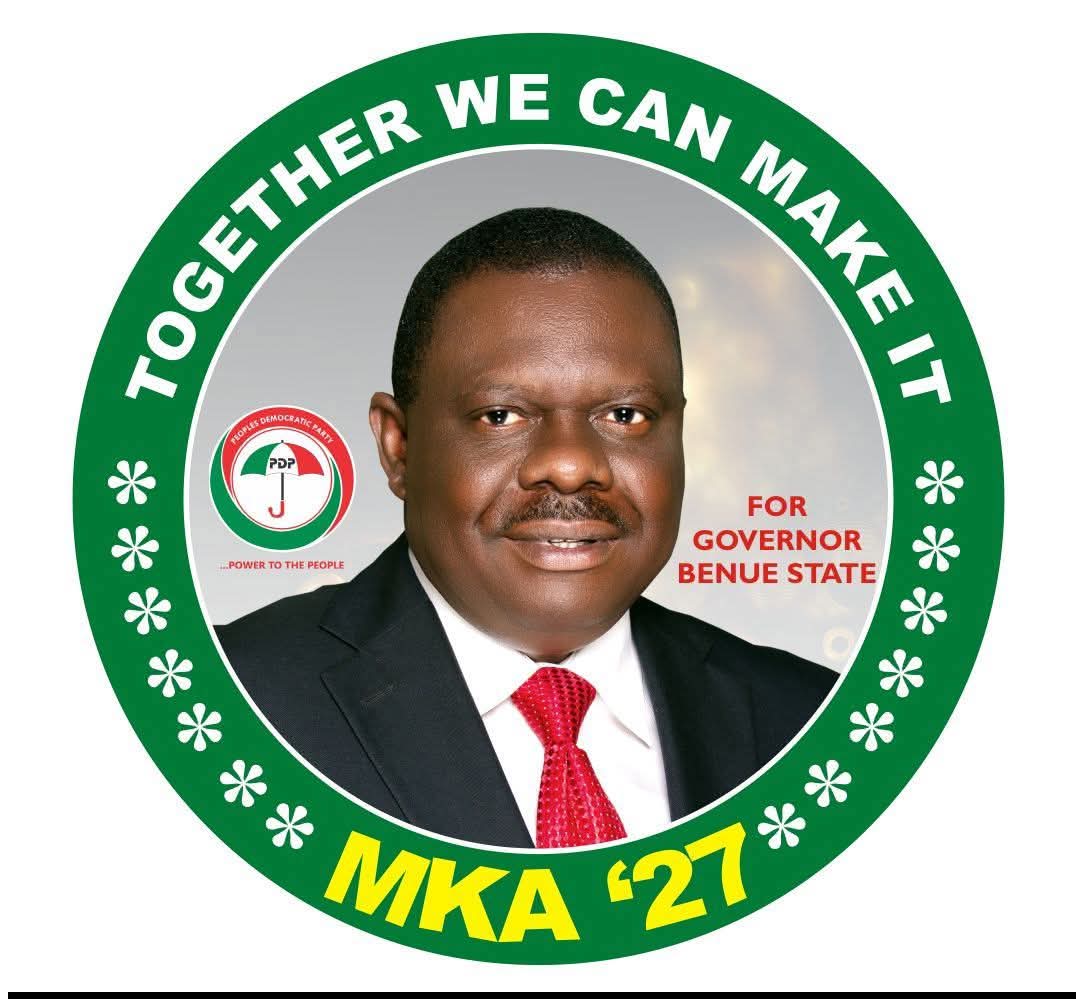
Ironically, the same report acknowledged an important political fact when it noted that the emergence of Chief Mike Kaase Aondoakaa, SAN, as the PDP consensus candidate signalled the party’s effort to rebuild around experience, elite negotiation and internal reconciliation. That single admission alone reveals the momentum already building around Aondoakaa’s candidacy.
To properly understand the Benue political landscape, one must analyse the state through its established political blocs. Benue politics is historically shaped around Jechira, Kwande, Sankera, MINDA/Lobi-Gwer and Jemgbagh in the Tiv axis, alongside the Idoma and Igede blocs of Zone C. Any analysis that fails to examine how candidates are positioned within these demographic and political structures cannot be considered complete or credible.
As a response to Daily Trust, we shall therefore examine the realities across these blocs and demonstrate why Chief Mike Aondoakaa currently holds the advantage heading into 2027.
Ordinarily, Governor Alia should dominate Jechira, his ancestral bloc comprising Vandeikya and Konshisha Local Government Areas. However, this is precisely where his electoral complications begin. Jechira is no longer politically consolidated behind him. The governor’s votes in the area will be fragmented among several influential sons of the bloc, including Prof. Terhemba Shija of the NDC, Dr. Mathias Byuan of the Labour Party and Rt. Hon. Iorwase Hembe of the ADC. While Chief Aondoakaa stands as an acceptable second-choice candidate across the divide, Governor Alia will struggle to secure the kind of bloc vote expected of an incumbent seeking re-election from his own base.
In Kwande political bloc, comprising Kwande and Ushongo Local Government Areas, the situation is even clearer. This is a region that has not produced a substantive civilian governor since the era of Aper Aku, whose administration was abruptly terminated by the military coup of 1983. There is now a strong sentiment within the area that it is their historical turn again. That sentiment has naturally crystallised around Chief Aondoakaa. The bloc is expected to vote massively and cohesively in his favour.
In Sankera made up of Katsina-Ala, Ukum and Logo , prevailing political sentiments also tilt toward Aondoakaa. In Katsina-Ala and Ukum especially, his acceptance remains strong. Governor Alia may only record a notable showing in Logo due to the influence of former Governor Gabriel Suswam. Even at that, available indicators suggest that Aondoakaa still maintains the broader advantage across Sankera.
The situation becomes even more politically damaging for Governor Alia in Jemgbagh, arguably the most historically influential power bloc in Tiv politics which is the home of both JS Tarka and Senator George Akume. During the 2023 campaigns, Governor Alia repeatedly promised to work harmoniously with the political leadership of the zone. Yet within three years, he has found himself in prolonged political battles with some of the area’s most influential figures. That fallout has weakened his standing considerably.
Chief Aondoakaa, on the other hand, enjoys longstanding relationships within Jemgbagh. He built part of his early professional and political life there as a young lawyer. Although Prof. Sebastine Hon of the SDP may command some influence within Gboko town, the broader political balance in Jemgbagh still tilts away from Governor Alia.
In the MINDA/Lobi-Gwer axis comprising Makurdi, Guma, Gwer West, and Gwer East , Governor Alia’s strongest performance may come from Makurdi due to ongoing infrastructural projects such as road rehabilitation and the underpass construction. However, infrastructure alone cannot override the worsening security concerns affecting the region.
Security remains one of the defining political issues of the 2027 election. The governor’s handling of insecurity in Guma, Gwer West and parts of Gwer East has generated deep public dissatisfaction. Chief Aondoakaa has consistently projected security as a top governance priority, and that message is resonating strongly with communities directly affected by attacks and displacement. Curiously, Daily Trust’s analysis failed to adequately capture this central political reality.
Having failed to consolidate the Tiv blocs convincingly, it becomes increasingly difficult to see how Governor Alia can substantially recover electoral ground in Benue South. Among governors elected since 1999, many in Zone C believe Governor Alia has paid the least political attention to the area. That perception of exclusion is politically consequential.
Consequently, both the Idoma and Igede blocs are expected to be more receptive to candidates such as Chief Aondoakaa and, to some extent, Rt. Hon. Iorwase Hembe. This, then, is the actual political map of Benue heading into 2027 , not the oversimplified projection presented by Daily Trust.
Governor Alia himself understands the mounting political realities confronting his administration. As Daily Trust correctly observed, the internal crises within the APC are already eroding his political foundation. But beyond party instability lies a deeper challenge there are widespread dissatisfaction over security management, political inclusion and the economic condition of the state.These factors, taken together, have significantly weakened the governor’s re-election prospects.
Chief Mike Kaase Aondoakaa, SAN, is therefore not merely participating in the 2027 race but he is steadily positioning himself as the leading contender.