Nigerian Concord Newspaper
Nigerian Concord Newspaper can authoritatively report that the allegations against the Chief Judge of the Federal High Court, Justice John Terhemba Tsoho, over a petition of involvement in an alleged $5 million bribery scheme aimed at overturning a court order restraining Nestoil Limited and its affiliates from tampering with their assets in a $1 billion debt recovery dispute is baseless and mere distractions.
Recall that three petitions were written against Justice Dehinde Dipeolu, one by the fourth defendant in the matter and two by the defendant lawyer himself Mofesomo Tayo Oyetibo, SAN, to the Chief Judge of the Federal High, Justice John Terhemba Tsoho, who directed the trial judge to respond within 7 days.
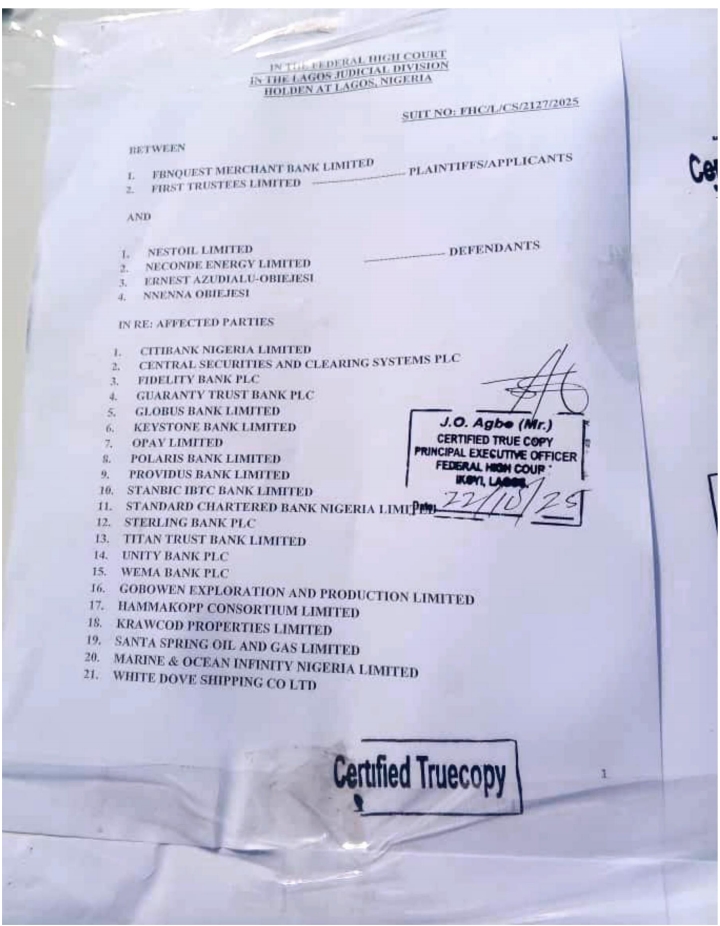
The allegations surfaced barely one week after Justice Dehinde Dipeolu of the Federal High Court in Lagos granted a Mareva injunction inSuit No. FHC/L/CS/2127/2025, empowering First Trustees Limited and FBNQuest Merchant Bank Limited to take possession of Nestoil’s assets pending determination of the case.
Investigations by our judiciary correspondent revealed that the story flying on some online platforms is aimed at diverting attention on the issues raised in the matter.
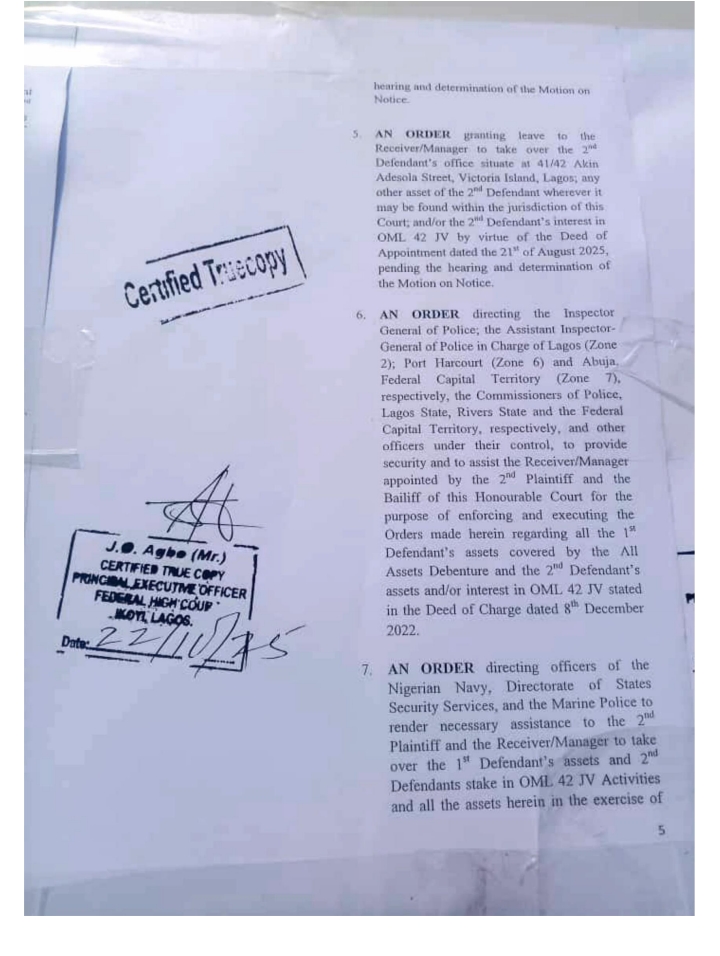
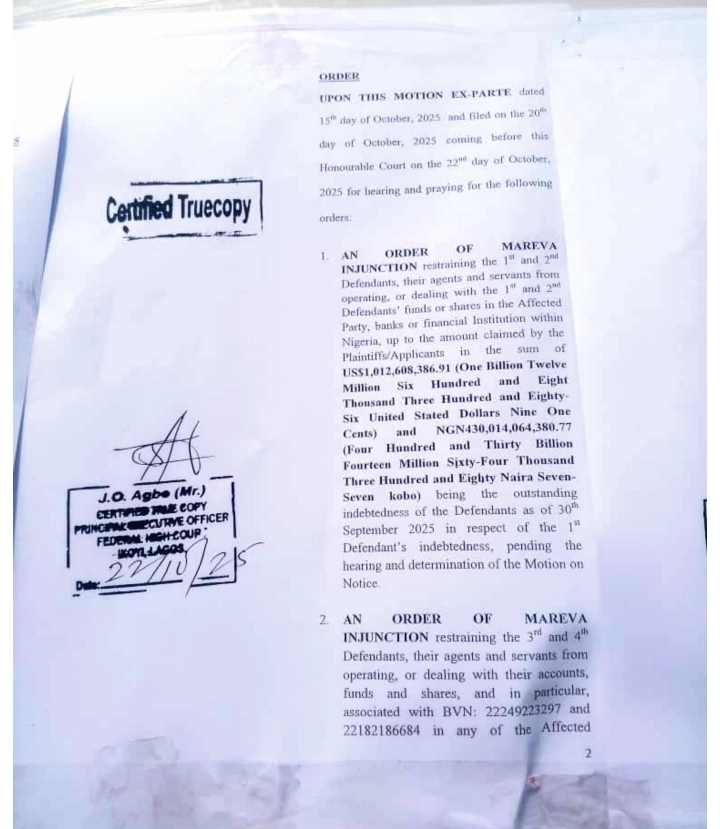
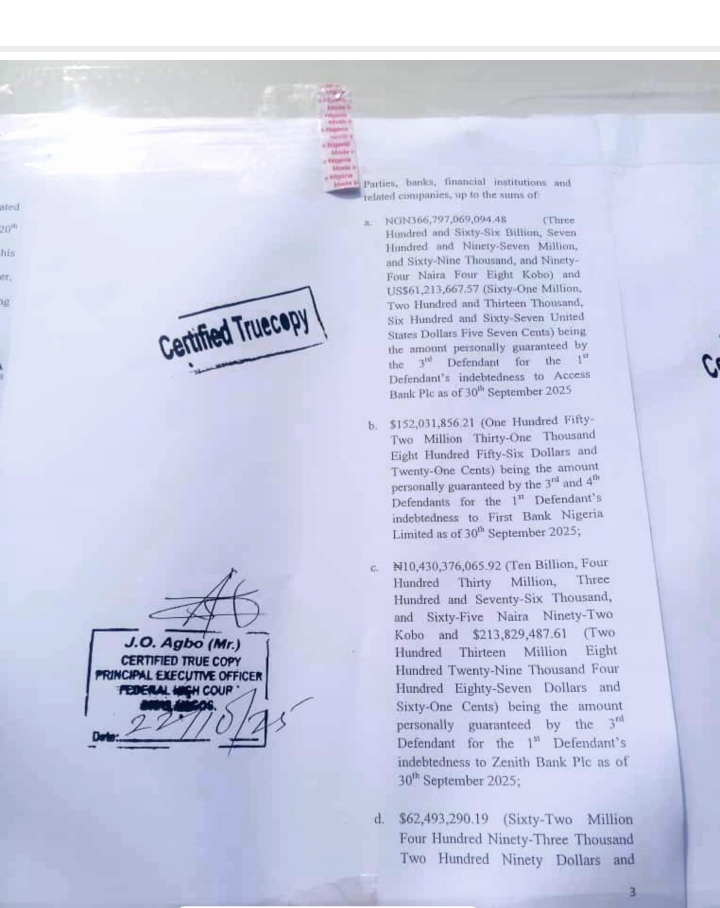
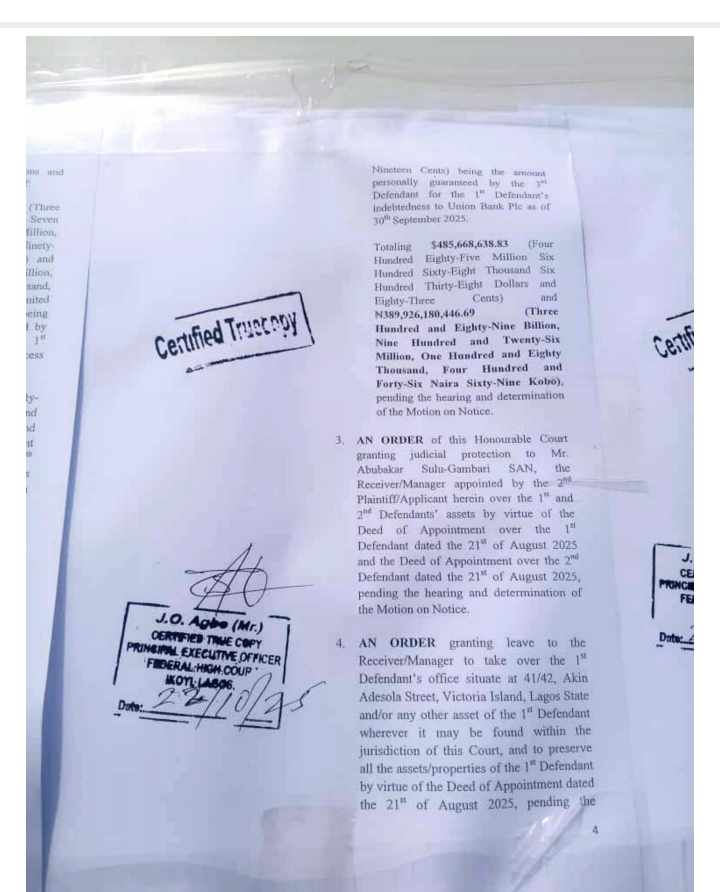
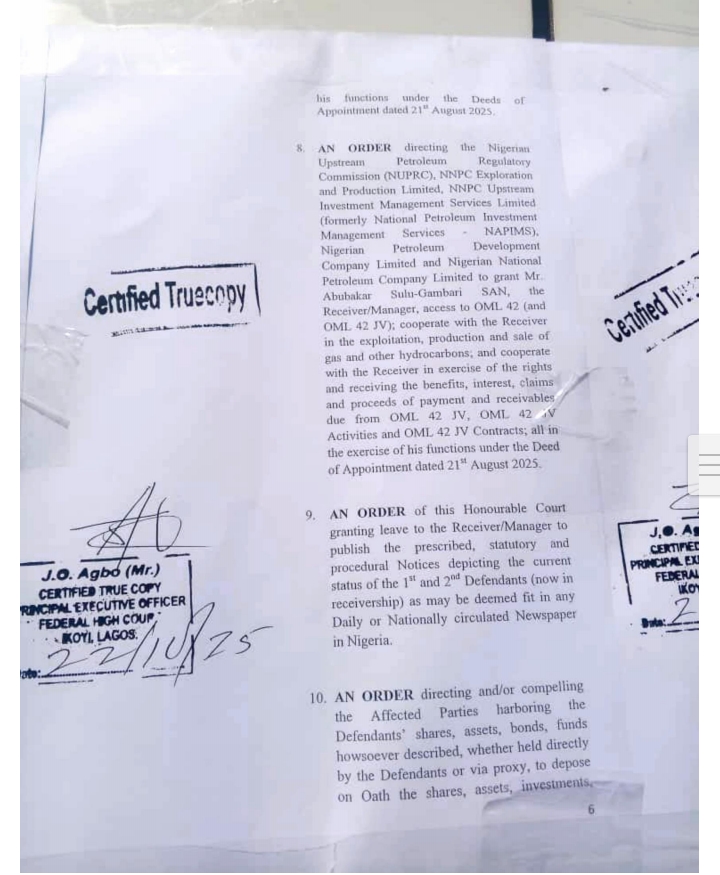
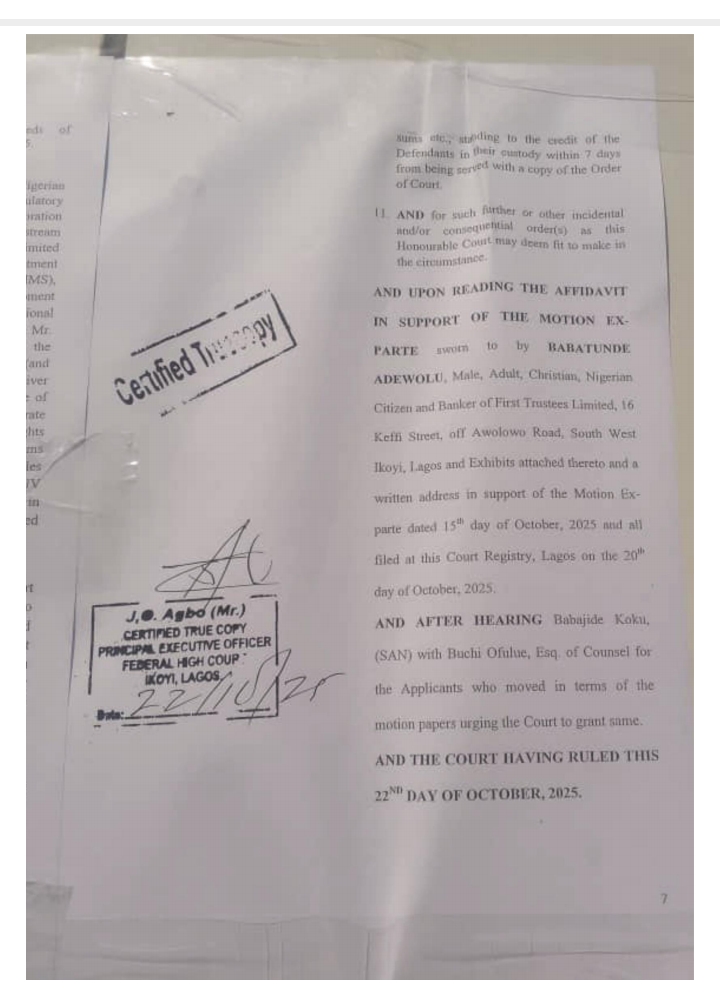
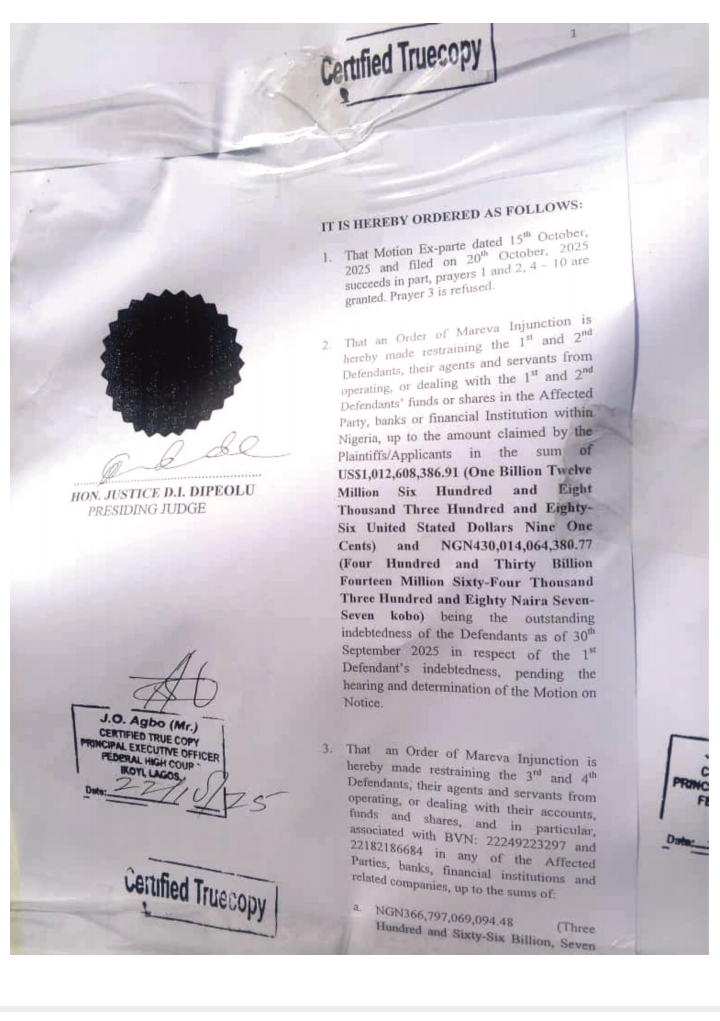
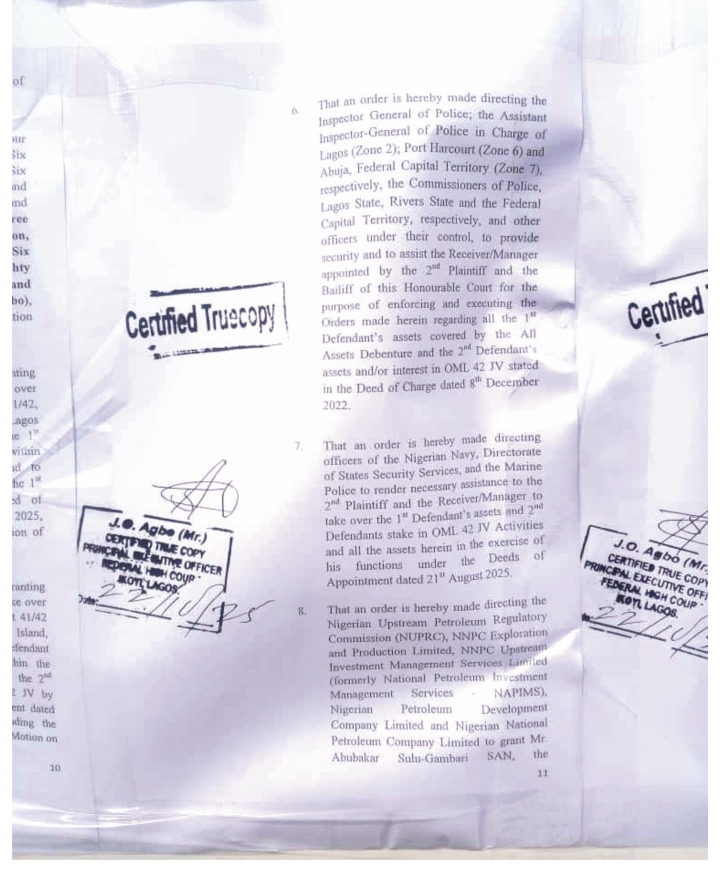
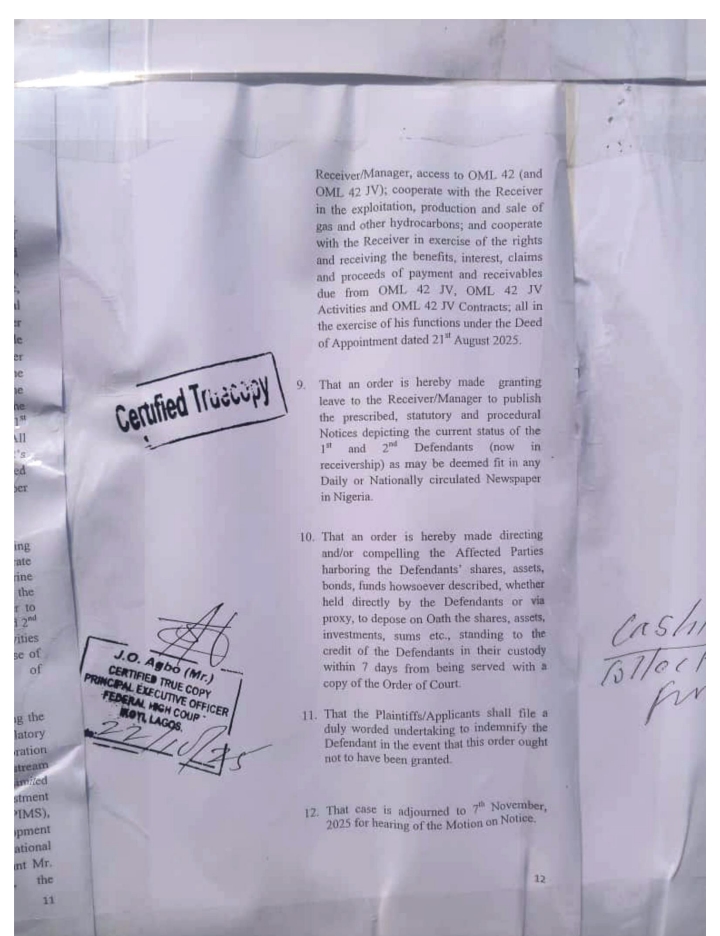
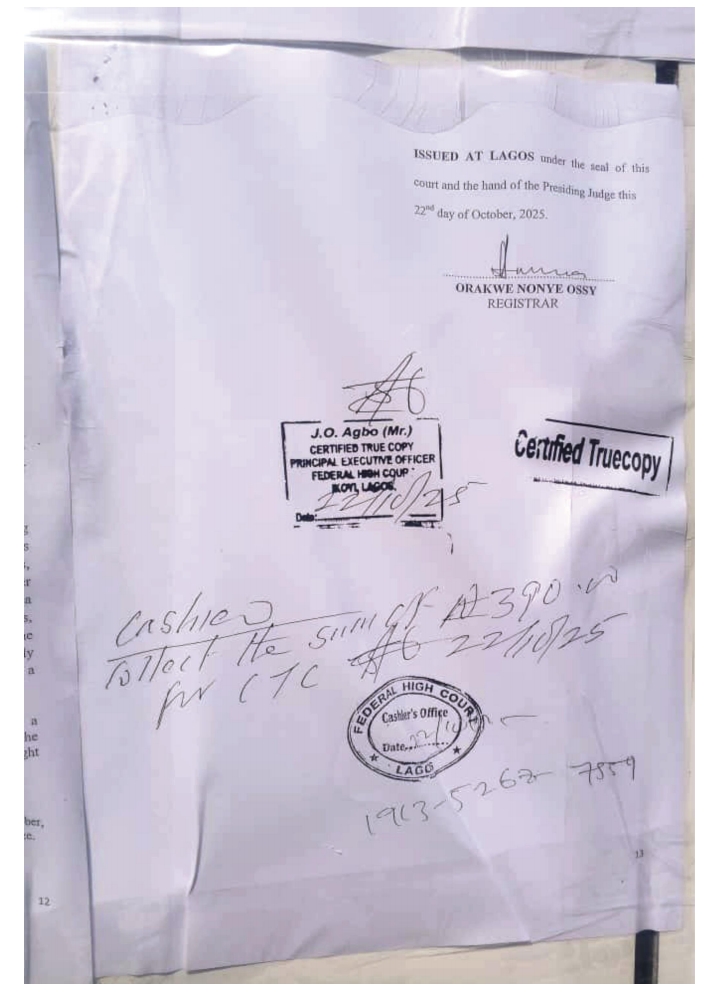
The investigation has revealed that on 22nd day of October, 2025 in Suit No. FHC/L/CS/2127/2025 between FBNQuest Merchant Bank Limited & 1 Other vs Nestoil Limited and others, the Federal High Court made Ex-parte orders which:
1. Were the same in all respects to those contained in the Motion on Notice and in the Originating Summons. In such a situation, granting the orders ex-parte will amount to determining the substantive suit and courts are enjoined to hear both parties before making such orders.
2. Apart from directing the Nigerian Police to assist the Receiver in carrying out the functions as directed by the
 court, it went ahead to also direct the Navy and the DSS to equally assist as contained in Order 7 in the attached ruling of the Court.
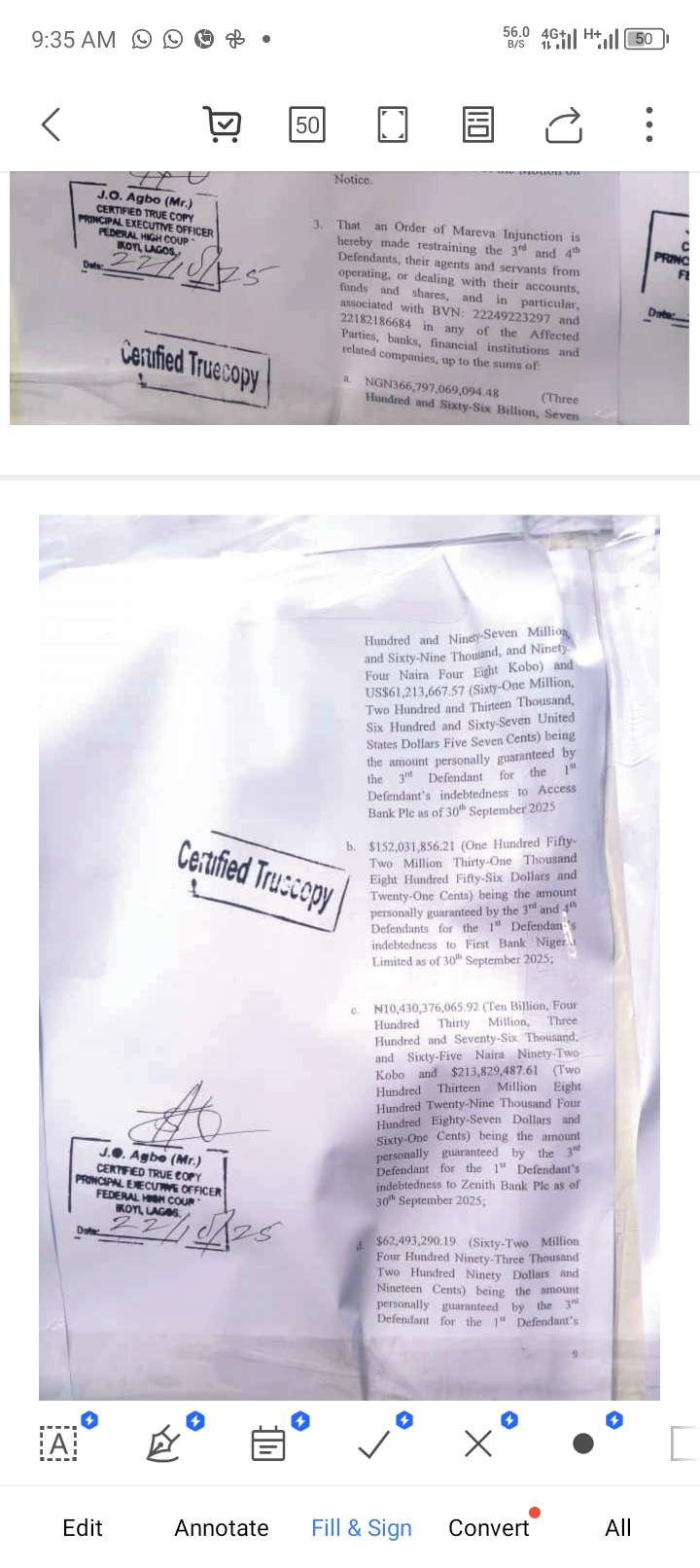
3. Thirdly, while Order 5 of the Ruling empowered the receiver to take over the assets of Nestoil Limited under the
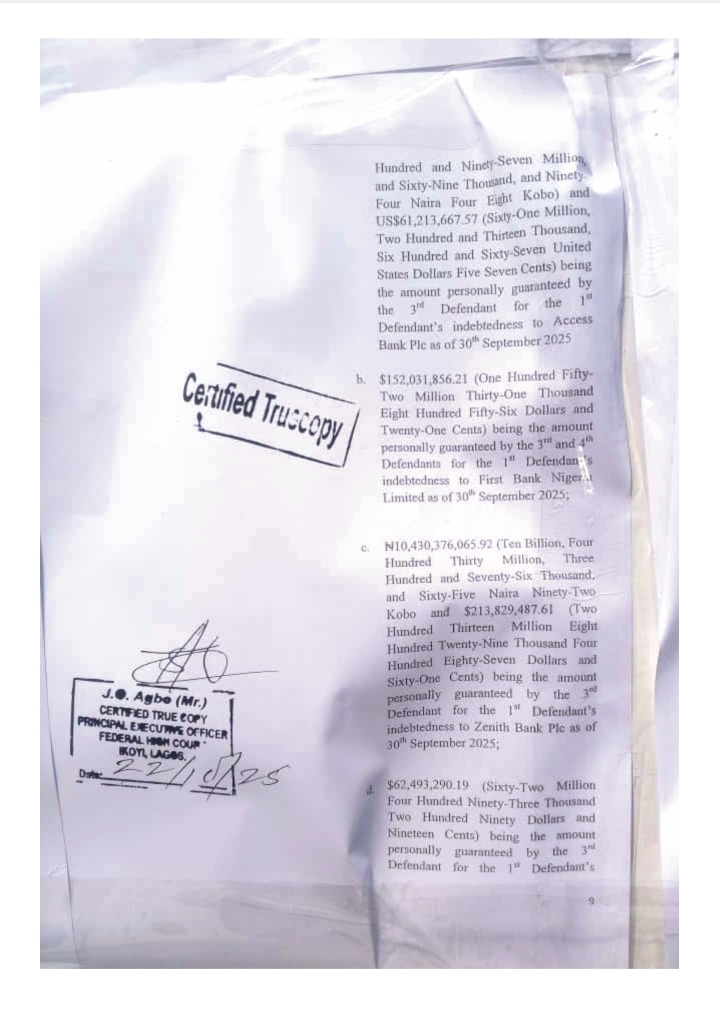
Receivership, which he was duty bound to preserve, Order 8 thereof, contrary to the preservative order, empowered the Receiver to dispose of the assets of the
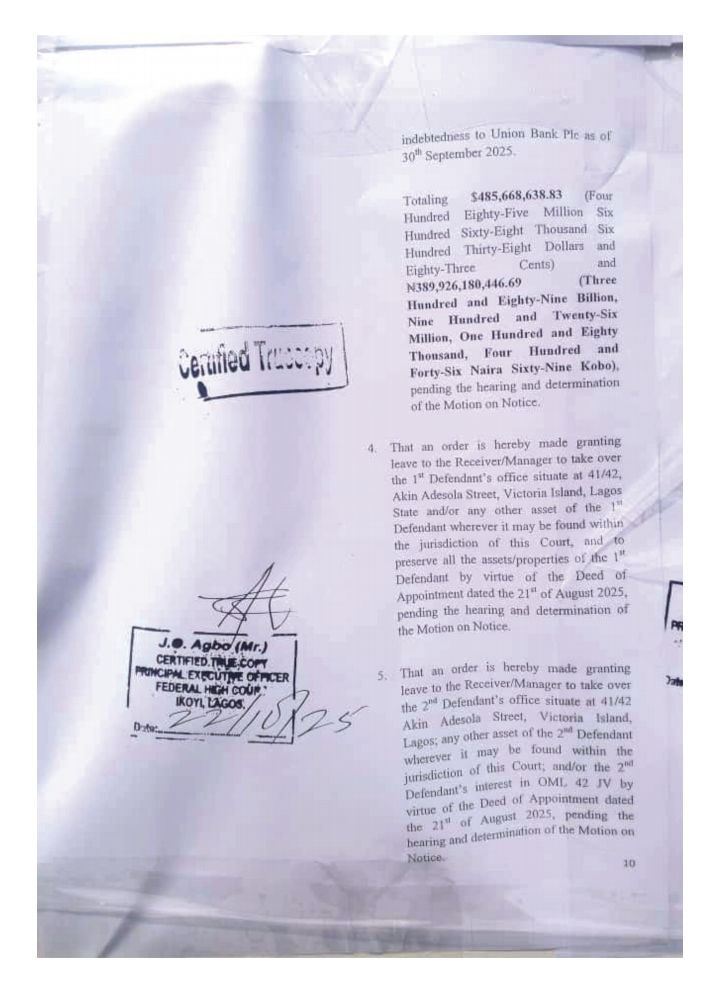 defendants, including the sale of crude oil. These two orders are clearly conflicting and mutually exclusive but were granted ex-parte.
4. Fourthly, the life span of ex-parte orders is for 14 days. Courts of law have been admonished not to grant far-reaching orders without putting the adverse party on notice in accordance with the Constitutional right to fair hearing.
Faced with the above scenario, the three (3) petitions were submitted to the Hon. Chief Judge of the Federal High Court, one written by the 4th Defendant and the other two by counsel to the Defendants in the suit, Mofesomo Tayo Oyetibo, SAN.
Faced with the weighty allegations contained in the said petitions, the Trial Judge, Hon. Justice D.I. Dipeolu was directed to respond within Seven days and to stay further proceedings within the period in order to preserve the sanctity of the judiciary.
Further findings Further revealed that the Chief Judge of the Federal High Court, never asked Justice Dehinde Dipeolu, to recuse himself from the matter but, exercising his constitutional duties only asked the trial judge to respond to the petitions written against him.
Furthermore, it was gathered that the story story over allegations bordering on bribery against the Chief Judge of the Federal High, Justice John Terhemba Tsoho, is a pure case of blackmail and mischief.
See the attached Ruling of the Court