Nigerian Concord Newspaper
Wednesday’s political engagements in Gboko offered me more than an opportunity to accompany the Peoples Democratic Party (PDP) governorship candidate, Chief Mike Kaase Aondoakaa, SAN, on a visit to two important constituencies in Benue State. They provided a fascinating insight into the issues that could shape the 2027 governorship election and, more importantly, some enduring lessons about leadership, public trust and political relationships.
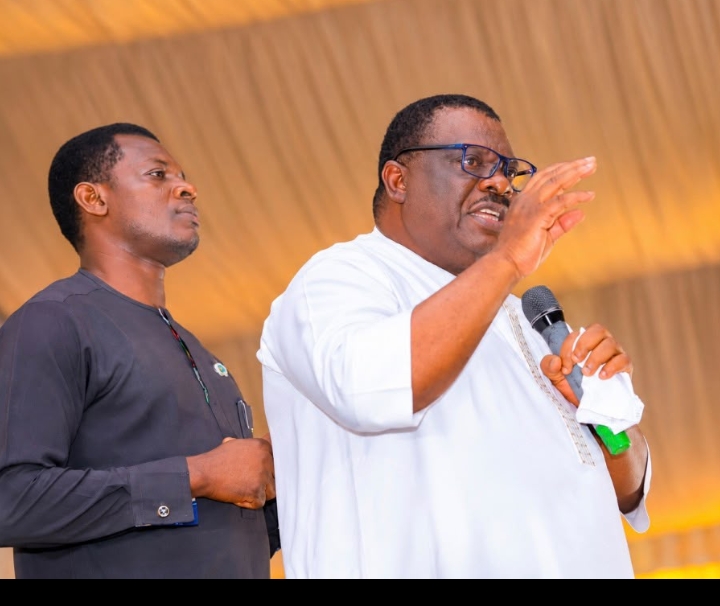
I was a member of Chief Aondoakaa’s delegation to Gboko where we met with the Progressive Pastors Forum Interdenominational, Benue State, and prominent youth leaders and political activists from Jemgbagh, comprising Gboko, Buruku and Tarka Local Government Areas.
I came away from the two meetings with three particularly striking observations.
THE FIRST WAS THE COST OF BROKEN PROMISES.
Listening to the pastors was perhaps the most sobering part of the day’s engagements.
The clergymen who came from different parts of Benue State, spoke candidly about their experiences and disappointments with the present administration. What particularly caught my attention was their recollection of how they had worked assiduously for the emergence of Governor Hyacinth Alia in 2023, largely because they believed his promises, especially his pledge to address insecurity and restore peace to troubled communities of the state.
They had thrown their spiritual and political weight behind him, convinced that a government led by a fellow clergyman would pay particular attention to the plight of communities devastated by insecurity.
But the reality they painted was quite different from the expectations they had nurtured.
The pastors spoke of communities where insecurity had forced residents to flee, churches that had shut down because worshippers could no longer gather safely, and places where the fear of attacks had become part of everyday existence. Their complaint was not merely that insecurity has persisted, but that, in their assessment, the present administration has not demonstrated the seriousness and urgency required to confront the situation.
Even more concerning was their revelation that, despite the numerous promises made to them before the 2023 election, they had not been given a meaningful opportunity to meet with the governor, even to remind him of those commitments.
I found this particularly instructive.
The pastors were not simply asking for political recognition or rewards for supporting a candidate. They wanted a government that would listen, respond to the suffering of their communities and honour the assurances upon which their support had been secured.
Their experience reinforced a fundamental principle of democratic leadership: political support is not a blank cheque. Those who entrust leaders with power expect accountability, accessibility and the fulfilment of promises.
A politician may win an election with the support of a constituency, but retaining its confidence requires something much more enduring than campaign rhetoric.
THE SECOND LESSON WAS THE VALUE OF A CREDIBLE PEDIGREE.
At both meetings, I observed how much a person’s antecedents matter in the assessment of his suitability for higher public office.
The pastors and the Jemgbagh youths repeatedly made references to Aondoakaa’s record of public service, professional accomplishments and political experience. They did not appear to be making their assessment of him merely on the basis of his promises for 2027. They were drawing from what they already knew about his journey and contributions to public life.
His distinguished legal career, service as Attorney-General of the Federation and Minister of Justice, and longstanding relationship with the people of Benue featured prominently in the conversations.
What struck me was the ease with which people connected his past experiences to the responsibilities they believe he can shoulder as governor.
This is one of the enduring advantages of a credible public service record. It gives people something tangible against which to measure a candidate’s promises. It provides a basis for confidence and makes it easier for people to imagine what such a person could accomplish, if entrusted with greater responsibility.
The endorsements and expressions of confidence we witnessed were therefore not simply about political persuasion. They reflected the importance of a trajectory that people could identify with and evaluate.
There is a lesson here for anyone aspiring to public office: reputation is built over time, and the record one creates in previous assignments can become the strongest argument for future opportunities.
THE THIRD LESSON WAS THAT LOYALTY MATTERS IN POLITICS.
This was particularly evident during the meeting with the Jemgbagh youths.
One of the issues that featured prominently in their submissions was their concern about what they perceived as a betrayal of political relationships by the incumbent administration.
Their argument was that political leaders and stakeholders who had invested years in building a political platform and mobilizing support for an emerging leadership deserved respect and recognition. They expressed displeasure over what they regarded as attempts by the current administration in Benue State to sideline those who worked for its emergence and take control of the very political structures that provided the platform for its success.
Whether in politics or other spheres of human endeavour, there is an important distinction between attaining a position of authority and acknowledging the relationships and contributions that made the attainment possible.
Power should not become an excuse for ingratitude. Neither should political succession be treated as an opportunity to dismantle the relationships that made it possible.
I found Aondoakaa’s response truly reassuring.
He told the youths that he had no intention of fighting anybody over party structures. Rather, he would respect the leadership of the party, work with its established structures and maintain constructive relationships with the political leaders whose contributions have shaped the political fortunes of Benue State.
He specifically expressed his readiness to work with the Senator George Akume, the Secretary to the Government of the Federation, and Chief Samuel Ortom, the immediate past governor, alongside other critical stakeholders, to take the state to greater heights.
To me, this was an important statement about his understanding of political leadership.
A party is bigger than the ambition of any individual. Those who inherit political platforms should understand that the structures they meet were built through years of sacrifice, negotiations, loyalty and collective effort. The wiser approach is to strengthen those structures, not wage battles to capture them.
Beyond the three observations, another moment that resonated with me was Aondoakaa’s assurance to the youths that his administration would give young people meaningful opportunities in governance, employment and enterprise development.
He also spoke about his humble beginnings in Gboko, recalling his early experiences and the lessons of perseverance and respect for elders that shaped his outlook on life.
His engagements with the pastors also provided an opportunity to outline his proposed priorities for Benue, including security, local government reforms, civil service transformation, agriculture, human capital development and infrastructure. His commitment to partnering with the NKST Church in the development of Mkar University was another significant aspect of the discussion.
As I reflected on the day’s activities, I realized that the two meetings, although involving different constituencies, were connected by a common expectation: the desire for responsible, accessible and dependable leadership.
I left Gboko with one overriding thought: leadership is not just about the power to govern; it is about the responsibility to remember, the integrity to deliver and the humility to acknowledge those who helped make the journey possible.
These, in my view, were the three important lessons from Chief Aondoakaa’s engagements in Gboko.