Nigerian Concord Newspaper
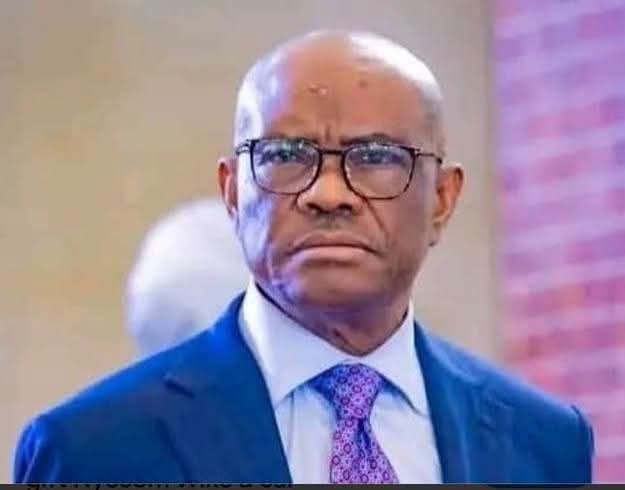
The recent statement by the Honourable Minister of the Federal Capital Territory, Nyesom Wike, regarding the Osun State Governorship Election is not merely reckless; it is a brazen admission of a dangerous mindset that has long plagued Nigerian democracy. In declaring that the All Progressives Congress would have won if President Bola Tinubu had deployed “Federal might” and that he, Wike, would have been personally involved to ensure that outcome, the Minister has once again laid bare the cynical philosophy that power, not the people, decides elections.
This is not political analysis. It is an open endorsement of the idea that elections can and should be decided by the raw force of Federal power rather than by the free choice of citizens. When a serving Minister boasts that “if the President had wanted to win at all costs, I would have been there and we would have won it, and there’s nothing the Governor can do,” he is not celebrating democratic restraint.
He is advertising the machinery of electoral subversion. He is telling Nigerians that the will of the people is optional, that votes need not count if those who control the levers of state decide otherwise.
This has been the tragic practice for far too long in our country: the systematic perversion of the people’s will through the deployment of security forces, the manipulation of institutions, the intimidation of voters, and the ultimate refusal to allow genuine votes to determine outcomes. “Federal might” has become a euphemism for the hijacking of democracy. Wike’s words do not deny this reality; they celebrate the capacity to wield it. His claim that “when you see the force and might of the Federal Government, you will know” is not a defence of fairness. It is a threat dressed as commentary.
True democracy rests on a simple, sacred principle: the people decide. When leaders speak casually of overriding that decision through superior force, they reveal contempt for the electorate. They reduce citizens to spectators in a contest of power rather than participants whose ballots are sovereign.
The Osun election result, whatever one’s political preference, should stand or fall on the votes cast and counted, not on whether one side chose to unleash the full weight of Federal authority. To suggest that a different outcome was available through the application of “might” is to confess that democracy itself remains conditional in the minds of some of those who hold high office.
Nigeria has paid dearly for this culture.
From one election cycle to the next, allegations of official interference, security agency overreach, and institutional capture have eroded public trust. Citizens increasingly believe that their votes are secondary to the calculations of those who control the centre.
Wike’s statement reinforces that corrosive belief. It tells every Nigerian that the real contest is not at the polling unit but in the corridors of power where “federal might” can be switched on or off at will.
God’s might is greater than any federal might. No amount of institutional force, security deployment, or political muscle can permanently suppress the will of a determined people under divine providence.
History is littered with examples of powerful regimes that believed their might was absolute, only to discover that the moral and spiritual force of popular sovereignty endures. Those who treat elections as exercises in the demonstration of superior force rather than the expression of the people’s choice ultimately stand on sand.
We must condemn this statement in its totality.
It is not clever politics; it is an assault on the foundational idea that power derives from the consent of the governed. Public office holders, especially those who have themselves been beneficiaries and victims of electoral contests, have a duty to defend the integrity of the ballot, not to advertise their readiness to override it.
The people of Osun, and of every other state in this federation, deserve leaders who respect their right to choose, not those who remind them that their choice can be nullified by superior force whenever it is convenient.
Nigeria will not grow into a stable democracy while its leading figures continue to speak of elections as contests of “might.” The path forward requires an unambiguous rejection of this mindset. Votes must count. The people’s will must prevail. And no amount of federal might should ever be allowed to stand above that sacred principle. God’s might remains greater, and history will judge those who forget it.
The Minister of the Federal Capital Territory also said that the 2027 presidential contest is already “over” for a “crippled and depleted” opposition.
In any functioning democracy that still pretends to respect the ballot, such language is disqualifying. It is not confidence; it is an open claim of specialised expertise in electoral capture.
When a sitting minister of the Federal Republic advertises that he can deliver outcomes irrespective of the expressed will of the electorate, he is not celebrating democratic resilience. He is advertising the very machinery that has repeatedly subverted it.
This is not new territory for Wike. His political career has long been shadowed by allegations of electoral manipulation, from the 2016 Rivers re-run controversies to disputed outcomes in subsequent contests. What is new is the brazenness: the willingness to state, on the record, that the tools exist, that he knows how to deploy them, and that restraint—not incapacity—explains why they were not used in Osun. In sane climes, that statement alone would trigger immediate investigation, not applause from political allies.
Security agencies and the Independent National Electoral Commission should treat this as an invitation. Wike has effectively presented himself as a specialist. He should therefore be invited, compelled, if necessary to assist in unravelling the pattern of electoral hijacks that have, over successive cycles, frustrated the genuine will of Nigerian voters.
He should be required to name his collaborators, the networks, the institutional weak points, and the methods he claims mastery over. If he truly possesses the knowledge he now flaunts, the public interest demands that it be extracted and used to fortify, not further degrade, the electoral system.
Public office is not a reward for political street-fighting prowess. It is a trust. Those who treat elections as contests that can be “delivered” by force of personality, federal muscle, or specialised know-how have already forfeited the moral and democratic authority to occupy that trust. Wike’s statement is not an isolated gaffe; it is a window into a political culture that still regards the ballot as an obstacle to be managed rather than the sole legitimate source of power.
Nigeria cannot continue to normalise such admissions. In societies that take democracy seriously, politicians who boast of their ability to override the electorate are removed from positions of influence and, where evidence exists, held to account. Anything less is an endorsement of the very practices that have hollowed out public confidence in the electoral process. Wike has spoken. The institutions charged with protecting the integrity of the vote now have a duty to act on what he has said.
Written by Ambassador ‘Kunle Adeloye, Public Affairs Analyst and Social commentator.